Friday, January 13, 2012

FESTIVALS OF LOHRI AND MAKAR SAMKRANTI


FESTIVALS OF LOHRI AND MAKAR SAMKRANTI


It is one of the most important festival of Northern India which is celebrated with utmost fanfare in traditional style. This festival is always celebrated on 13th January. Lohri  marks the end of winter season and it is the day when the sun changes its course also which is also called ‘Makar Samkranti’ which too is celebrated throughout India which marks the start of auspicious days. Makar Samkranti marks the transition of sun from Saggitarius to Capricorn during winter in the northern hemisphere which is called ‘Uttrayan’ (Sun starts moving towards northern side).  In Northern India It is called ‘Makar Samkranti and celebrated on 14th January.  In other parts of India, it is celebrated with different names like Pongal in South India, Bihu in North East India etc.  People who are inclined towards old traditions and religion, take a dip in the morning in the holy water of sacred rivers or ponds etc and worship the Sun to give them peace and prosperity. People also give charities to the poor and needy ones in the form of food, clothes and also money etc. These traditions are still alive and in small town and cities of India which are not fully affected by modernism, one can find stalls distributing hot food, clothes and money to the poor and needy ones on the day of Makar Samkranti.  This tradition is continuing since the time immemorial and finds its mention in our ancient scriptures as well.
As regards Lohri, it is a festival of Punjab in India and it has its origin in Punjab and nobody knows as to how it started and how old it is. There are various stories popular behind this festival.
Some people believe that it is related to the famous tale of a person namely ‘Dulla Bhatti’. Dulla Bhatti was a highway robber in Punjab during the reign of Akbar who was the emperor of India at that time in 16th Century. Dulla Bhatti used to rob the rich only for specific purpose to help the poor and needy with the money he robbed from the rich. He also used to rescue the girls who were kidnapped and taken forcibly for sale in  the slave markets of other neighbouring countries. He also used to give money to the parents of the rescued girls for arranging their marriage. As such he was a superman for the people of Punjab during that time.  That is why the most famous song of  Lohri  which everyone in India is well acquainted and sings with great zeal has his name in almost every line of the song to express gratitude to Mr Dulla Bhatti, a bandit by profession but a noble soul.
 When the festival of Lohri starts approaching in January, small groups of boys and girls knocks at the door of houses and start singing the famous song of Lohri i.e. "Chunri Munri ho, Tera Kaun Bichara ho, Dulla Bhatti wala ho.............”. People take it as auspicious if the groups of the little boys knocks their doors singing this song. In turn, people give them popcorn, peanuts, dry fruits, crystal sugar, sesame seeds (til), jaggry as well as coins. Though, in big cities, this tradition of boys knocking the doors on Lohri is getting reduced, but in small towns and cities of Punjab and Northern India, one can discern these things very easily for at least 15 days before the festival finally comes on 13th January.  

Some people are of the belief that the festival of Lohri has  its an other link. It has derived its name Lohri from the word  ‘Loi’ who was wife of a famous poet cum saint, Kabir Das who also lived during the period of Akbar in 16th century. In local Punjabi dialect, Lohri is pronounced as Lohi. Some people associate this festival with an other ancient legend of Holika, and Lohri is believed to be the sister of Holika. Holika was burnt in the holy fire by Hirnakashyap who was against even the recital of God's name. Holika burnt in the holy fire but Lohri survived after that. And people celebrate this festival to remember her. As regards Holika, Hindus celebrate a separate festival for her holy sacrifice in the fire, called Holi which too is celebrated in the month of February or March every year. Holi is the festival of colors which is well known all over the world.
 
Celebration of Lohri is very simple but very attractive which tightens the relationship and emotional bonds between the people. Freinds, relatives and family members gather  in the open space in or outside home and light a bonfire at sunset. All sings together and move around the bonfire dancing, rejoing and chanting  Lohri songs. They also throw some peanuts, jiggery and sesame seeds (reoris) etc in the bonfire to worship it. In addition to this, they sit around this bonfire gossiping, cracking jokes, doing mimickery, singing songs, playing antakshri etc for hours making the atmoshpere more pleasant.This continues for 2-3 hours till 10-11 pm. Really It is fantastic to celebrate such festivals in India. Some people organise dinner etc on this occasion which adds to the celebration. In villages of Punjab, people celebrate this festival whole of the night.
May God bring peace, harmony and prosperity in the world ..... Let us do our Ek Koshish one attempt to make the world a single family through these festivals !

 Ek Koshish one attempt

Wednesday, January 11, 2012

Stop Sanitised Barbarism"


"Stop Sanitised Barbarism"

Girls are Pearls, Save Them !!!

In its attempt to spread awareness in the society about the dangers of sex imbalance in the society due to increasing female infoeticide which was called "Sanitised Barbarism" in the decade of 1970s, Ek Koshish has orgainsed a drawing competition on the topic in which students at Ek Koshish and friends of the team of Ek Koshish participated. This was awarded as the best drawing:

 
Let Us Join Hands do Ek Koshish One Attempt - in Making the Most Sacred Place (Womb of a Mother) Safe for Innocent Girls before Their Appearance in This Beautiful World !!!!!

Ek Koshish one attempt

Thursday, December 1, 2011

Save Our Girls!

APPEAL:

"GIRLS ARE PEARLS"

SAVE THEM!

Ek Koshish has started a campaign to make people aware about the rising gender imbalance in society. Truly, girls are pearls, who must be esteemed as priceless!!!!!!!!!!!!! Ek Koshish has adopted the above slogan for its campaign to spread awareness and combat this imbalance.

Ek Koshish, One Attempt

Wednesday, October 19, 2011

Indian Tradition: ‘Ahoi Ashtami’- One Day Fast by Mothers for Well-being and Long Life of Their Sons


Unique Indian Tradition: ‘Ahoi Ashtami’- One Day Fast by Mothers for Well-being and Long Life of Their Sons
Today is the religious celebration of Ahoi Ashtami in India. In Hinduism, this ritual of  keeping fast by mothers for well being and long life of  their sons which is popularly known as ‘Ahoi Ashtami’ that falls on 8th day of Kartik month every year is the most important ritual in Indian culture and religion. This not only shows immense love and affection of mothers towards their sons but also tends to keep the families joint and united by filling the thoughts of respect and regards by sons for their mothers. This is unique tradition in India as no other country seems to have such tradition. There is a story behind this most important ritual in Indian culture and religion. 
There lived a woman with her seven sons and one day she went to forest to bring some soil to plaster the floor of house. While she was digging soil in the forest, she unfortunately and unintentionally killed a small cub like creature. She felt unhappy and sorry over this incident and came back to home. After this incident all of her sons died one after another within a year. The woman started believing in her heart that her sons died due to her sin of killing that cub. One day she narrated the incident of her killing of that cub to some wise ladies in her neighbourhood.   Upon hearing the story of that woman, they advised her to keep fast, confess and pray the Almighty Goddess Ma Bhagwati by making a picture of that cub on the wall on 8th day of Kartik which would redeem her sin of killing the cub. The woman kept fast on that day and prayed the Goddess as was advised by making a picture of that cub on the wall and after some time the Goddess blessed her with all of her seven sons. Since then, this tradition has become a ritual amongst the Hindu mothers to worship the Almighty Goddess Ma Bhagwati by keeping a whole day fast and praying the Almighty Goddess Ma Bhagwati in the form of picture of cubs made on a wall of house for the well being and long life of their sons. Really the tradition is filled with immense love and affection between mothers and sons.  

On this day Hindu mothers make pictures of cub(s) on the wall of their house or hang pictures of Ma Bhagwati on the wall and pray Ma Bhagwati as shown in the picture. For the long life of their sons, they also wear a necklace of silver beads around their neck.   Two silver beads are added every year in this necklace of silver beads for long life of their sons. Mothers keep on adding these silver beads until they die. In the day time, women/mother gather and listen to the story of Ahoi Ashtami with great devotion. In the evening they pray Goddess Bhagwati and then also pray stars for the long lives of their sons. After that they give food to the eldest lady in the house or if there is no elder lady in the home, they give food to some other elderly woman in the neighbourhood or in the temple. After that only they eat something to break their fast.
It is really a unique tradition in India only to cement the bonds of love and affection between mother and son.
Ek Koshish One Attempt

Thursday, October 6, 2011

India Celebrates Dussehra Festival : Victory of Good over Evil


India Celebrates Dussehra Festival : Victory of Good over Evil

Dussehra is one of the most popular and one of the most celebrated festivals of India which is celebrated with great fanfare, joy and enthusiasm. In India as per local calendar it is also called Vijaydashami being falling on the 10th day of Ashwin month (in English Calender this month falls in September-October every year). This festival is celebrated in memory of victory of good over evil and also victory of truth over untruth.
Before Dusserah Indians celebrate Navratra which literally means Nine Sacred Nights and during these Nine Sacred Days/Nights all Hindus worship Goddess Ma Durga and hence these nights are known as Navratras.
According to Hindu mythology, Lord Rama, the eighth of the twenty four incarnations of Lord Vishnu killed Ravana or Dashanan (a demon having ten heads), the king of Lanka (now known as Shri Lanka) on the Tenth Day of their battle in Satya Yug (the age/period four five thousand years ago, in which Lord Rama reigned over people and everybody was properly looked after and taken care. We have the concept of a welfare state from Lord Rama’s period) and rescued his wife, Goddess Sita from the clutches of Ravana. Hence that day of victory is known as Vijayadashami or the Victory on the Tenth Day.
This day is also celebrated and is important for another mythological incident. It is also believed that on this day the exile and banishment of the Pandavas came to an end which connects this day with another age of Mahabharata where Lord Krishna, the 10th incarnation of God came on the earth. The Pandavas defeated the Kauravas (hundred sons of King Dhritrashtra who symbolise evil and grabbed the kingdom of the Pandavas after defeating them in gambling with cheating). As such Hindus worship their weapons etc on this day to mark the greatness of the day which symbolises victory of Good over Evil.  
This day is also auspicious as it commemorates the legend in relation to Goddess Durga, known by various names in entire India like Ma Chamunda, Ma Kali, Ma Vaishnau, Ma Sheronwali etc. The legend is this that Goddess Durga killed the  deadly demon Mahishasura on this tenth day after a continuous fight of nine days. Hence this day of Dussehra is marked as the day of victory good over demonic powers.
It is an auspicious occasion for men, women and children to commence their ventures, education, learning in classical dance and music and to pay their respect to their elder ones.
In southern part of India, during these nine days before Dussehsra,  first three days are dedicated to the worship of Lakshmi, the Goddess of Wealth and Prosperity; the next three days to Saraswati, Goddess of Learning and Arts and the last three days to Shakti, Goddess of Power and Might and the tenth day is marked as symbol of victory over evil.
In India, Dussehra of Kullu (in the state of Himachal Pradesh) is well famous where not only thousands of people take part for nine days but also it is believed that Gods and Goddesses take part. People from all over the world gather there to be part of this celebration there. Similarly in South India, Dussehra of Mysore is celebrated in a grand style by the Royal Family of Mysore. Dussehra is so famous in Mysore that it is known as the State Festival of Mysore in Karnataka. During the festivity of Dussehra, the entire atmosphere is colourful. People gather in the open play grounds to enjoy a lots of live performance of folk and traditional artists, to watch spectacular short acts on the lives of Lord Rama and Ma Durga and others. There is also a stunning display of fireworks all around in the evening before the effigies of Ravana, Meghnath (Ravna’s son) and Kumbhakaran (Ravan’s Brother) are burnt amidst a great crowed of people.
If anyone gets a chance to be in India during Dussehra festival  don't miss this fascinating festival and try to understand the hidden meaning behind this festival which marks brotherhood, peace, prosperity for all.
Let's have a vow to do good forever...............
Wishing you all a very very happy and prosperous Dussehra !

Ek Koshish one attempt 

Saturday, September 17, 2011

PROGRESS OF THE ILLETRATE CHILDREN FROM SLUMS AT EK KOSHISH


PROGRESS OF THE ILLETRATE CHILDREN FROM SLUMS AT EK KOSHISH

It is rightly said in our scriptures : SHIKSHA DAAN MAHA DAAN (Gift of education is biggest one) 
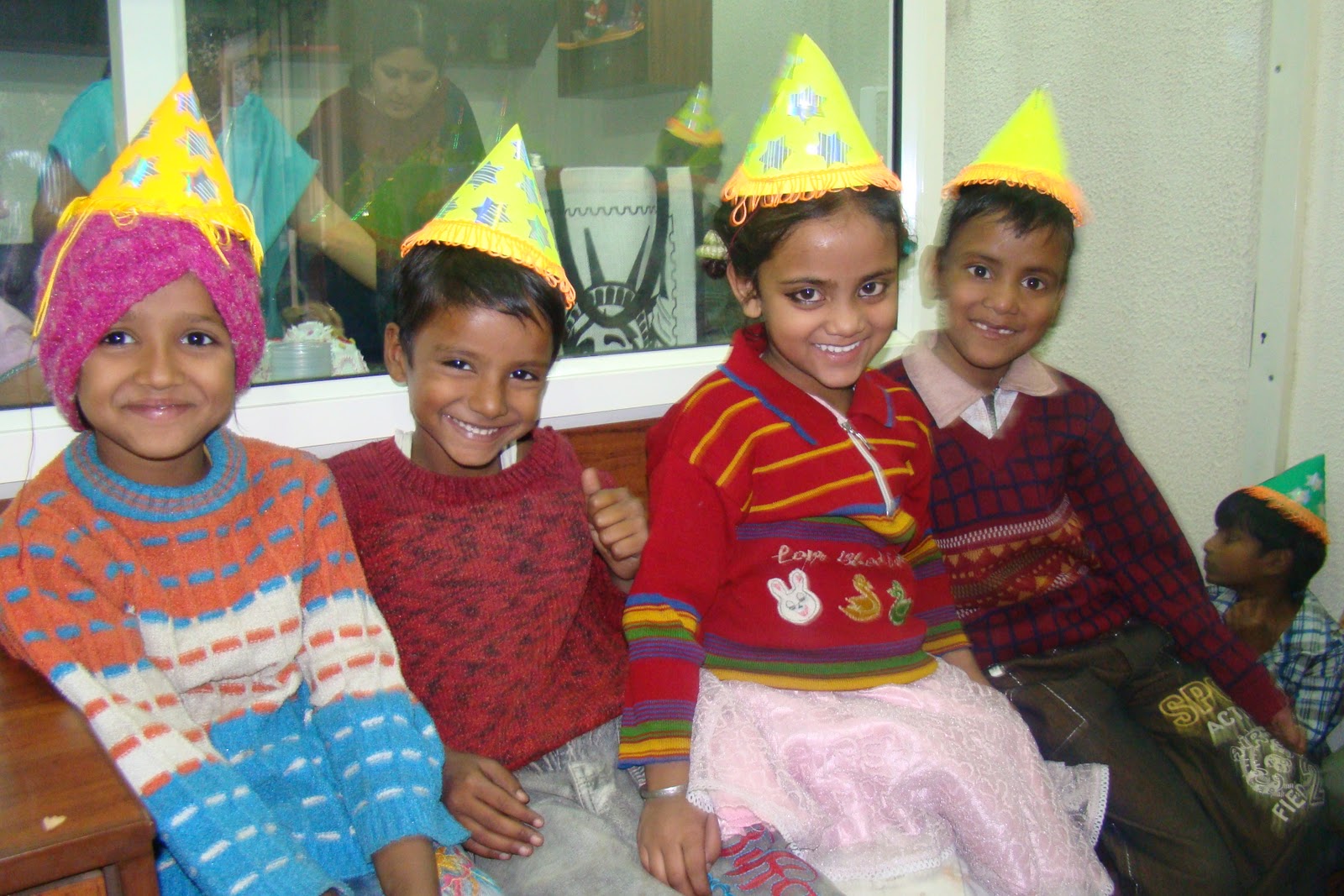
Entire team of Ek Koshish feels happy and proud as the children (presently 9) whom  they have been teaching for 3-4 months are at least now ready for being compared with other school going children of the society. The Children at Ek Koshish have now started showing their keen interest in study. Some of the children has learnt alphabets, counting, reading and writing  words  etc along with some Hindi and English rhymes. They have also learnt manners.  As such in their attempt to prepare and provide proper education to the children coming from slums and under privileged society, the members of Ek Koshish have performed a commendable job appreciated by many in the society.  As a result of tremendous efforts of the entire team of Ek Koshish,  some of the public schools have shown their keen interest in giving admission to these children after judging the educational temperament of these students whom the team of Ek Koshish  has been preparing  and tuning by giving personal  one to one attention on each and every child.  If these children are sent to public schools, Ek Koshish would undertake the responsibility to bear all the expenses to be incurred on the education of these children at those schools. We hope that we shall continue in our endeavour with the co-operation and assistance provided by all our workers, members and patrons.
Congratulations to the entire team of 'EK KOSHISH one attempt' ....... as our little attempt is going to be successful....

Chairperson,
EK KOSHISH one attempt